
Looking for advice (EDC)
-
OHO serated like a Forester or new Soldier on the end of a lanyard sounds like a good choice to me. I attache the lanyard to my belt and all I have to do is grab the lanyard run my hand down it to my knife and open it all with one hand.

-
-
Leatherman C33X.

-
@hiraethus said:
Leatherman C33X. [emoji14]ok:Actually that is a good suggestion. And if you want a couple drivers check out the c33tx.
-
@hiraethus said:
Leatherman C33X.How is the rust resistance? If he is working around water, an SAK might be a better bet. They just seem so much more rust resistant than LM products. My Rebar has rust spots just from sitting doing nothing. SAKs are dang near rust-proof.
-
@twiliter said:
Thinking Master RT here, a good OH user, and would still hold value retired. Maybe difficult to find, but worth it. A 111 Soldier is a good option, but not as collectable. http://www.sakwiki.com/tiki-index.php?page=Master_111mm
I realise that the wood saw is probably useless on a boat*, but it adds an extra layer that apart from bringing the knife blade in the middle (hallelujah, Vic !!!) it also provides a better handle to grip on to. Also, I'd expect the Soldiers to hold some collectibility due to year stamp?
One-hand opening can be useful on a boat, so does a lanyard attachment point, as others have said

And there's also a OH Locksmith (wood saw and metal file/saw) >:D ::) but the link to the pic doesn't seem to be working.
*Until one end's up on some little island playing Robinson Crusoe :P (Gods forbid).
-
@comis said:
Depending how much rope you might expect to cut and how abrasive are the ropes, I'd recommend the One-hand-opening plain edge Vic trekker. Reason being Vic uses probably one of the most rust proof steel on MT market, OHO plain edge trekker is not too expensive and easy to resharpen.Unless you have no access to sharpening tools, and need to continue cutting for a very long duration, then I will see advantage in using serration instead of plain edge.
Actually, being an active sailor, I have to disagree Comis. I keep my blades quite sharp, but when it comes to cutting line on a regular basis, a serrated blade is really the only way to go.
As for rust potential, it depends on the user and how often they clean/sharpen their pocket tools. If you dry and clean it fairly regularly, then rust probably won't be an issue. If you want to leave it in a drawer on the boat, then rust will probably be an issue.
For a pocket tool (ie, EDC) , the LM C33x isn't a bad recommendation in this case!

-
Depending how much rope you might expect to cut and how abrasive are the ropes, I'd recommend the One-hand-opening plain edge Vic trekker. Reason being Vic uses probably one of the most rust proof steel on MT market, OHO plain edge trekker is not too expensive and easy to resharpen.
Unless you have no access to sharpening tools, and need to continue cutting for a very long duration, then I will see advantage in using serration instead of plain edge.
Actually, being an active sailor, I have to disagree Comis. I keep my blades quite sharp, but when it comes to cutting line on a regular basis, a serrated blade is really the only way to go.
Thank you for your input, I am planning to make video to compare different MTs blade for edge retention, and do plan to use manila/hemp rope cutting as a test. This post has sparked my interest to use two almost identical blade(OHO PE trekker vs OHO soldier) to compare their efficient and whether a serrated blade actually cuts longer. I will try to use the same potion of the PE blade to cut rope, to be fair.
I think the following article offers a pretty objective views on "PE vs Serrated":
http://www.knifeart.com/plainbyjoeta.html -
Depending how much rope you might expect to cut and how abrasive are the ropes, I'd recommend the One-hand-opening plain edge Vic trekker. Reason being Vic uses probably one of the most rust proof steel on MT market, OHO plain edge trekker is not too expensive and easy to resharpen.
Unless you have no access to sharpening tools, and need to continue cutting for a very long duration, then I will see advantage in using serration instead of plain edge.
Actually, being an active sailor, I have to disagree Comis. I keep my blades quite sharp, but when it comes to cutting line on a regular basis, a serrated blade is really the only way to go.
Thank you for your input, I am planning to make video to compare different MTs blade for edge retention, and do plan to use manila/hemp rope cutting as a test. This post has sparked my interest to use two almost identical blade(OHO PE trekker vs OHO soldier) to compare their efficient and whether a serrated blade actually cuts longer. I will try to use the same potion of the PE blade to cut rope, to be fair.
I think the following article offers a pretty objective views on "PE vs Serrated":
http://www.knifeart.com/plainbyjoeta.htmlNice article...thanks for sharing!
If you want to test, you might include different types of lines along with the manilla/hemp. I'd consider nylon and polyester lines, both braided and stranded.
For all my on-the-water activities, I regularly carry an SAK (Golfer or Cadet) in my pocket. This takes care of everything from cutting tape or sail materials, to small screwdriver needs, to opening beers. On my belt is usually my original Gerber MP tool (Mr. Pinchy), which has both plain and serrated blades. The serrated blade is used for cutting lines. Any of the plain blades handle most/all other cutting chores.
On my power boat, I keep a Bucklite 4" folder handy, especially for fishing. It cuts small lines just fine. When racing, my GIbberson rigging knife has done yeoman's duty for over 25 years cutting, prying, and splicing. But when it comes to cutting higher performance lines, Mr. Pinchy's serrated blade or the Myerchin B300P (partially serrated blade) are really preferaable and quicker to cut with.
-
Depending how much rope you might expect to cut and how abrasive are the ropes, I'd recommend the One-hand-opening plain edge Vic trekker. Reason being Vic uses probably one of the most rust proof steel on MT market, OHO plain edge trekker is not too expensive and easy to resharpen.
Unless you have no access to sharpening tools, and need to continue cutting for a very long duration, then I will see advantage in using serration instead of plain edge.
Actually, being an active sailor, I have to disagree Comis. I keep my blades quite sharp, but when it comes to cutting line on a regular basis, a serrated blade is really the only way to go.
Thank you for your input, I am planning to make video to compare different MTs blade for edge retention, and do plan to use manila/hemp rope cutting as a test. This post has sparked my interest to use two almost identical blade(OHO PE trekker vs OHO soldier) to compare their efficient and whether a serrated blade actually cuts longer. I will try to use the same potion of the PE blade to cut rope, to be fair.
I think the following article offers a pretty objective views on "PE vs Serrated":
http://www.knifeart.com/plainbyjoeta.htmlNice article...thanks for sharing!
If you want to test, you might include different types of lines along with the manilla/hemp. I'd consider nylon and polyester lines, both braided and stranded.
For all my on-the-water activities, I regularly carry an SAK (Golfer or Cadet) in my pocket. This takes care of everything from cutting tape or sail materials, to small screwdriver needs, to opening beers. On my belt is usually my original Gerber MP tool (Mr. Pinchy), which has both plain and serrated blades. The serrated blade is used for cutting lines. Any of the plain blades handle most/all other cutting chores.
On my power boat, I keep a Bucklite 4" folder handy, especially for fishing. It cuts small lines just fine. When racing, my GIbberson rigging knife has done yeoman's duty for over 25 years cutting, prying, and splicing. But when it comes to cutting higher performance lines, Mr. Pinchy's serrated blade or the Myerchin B300P (partially serrated blade) are really preferaable and quicker to cut with.
Those are some really solid ideas, and I think what I am going to do is make a separate test just to show 'serrated' vs 'non-serrated' knife on different types of ropes.(hopefully I could find what you have suggested). I am also curious to see whether this will differ in day-to-day task.
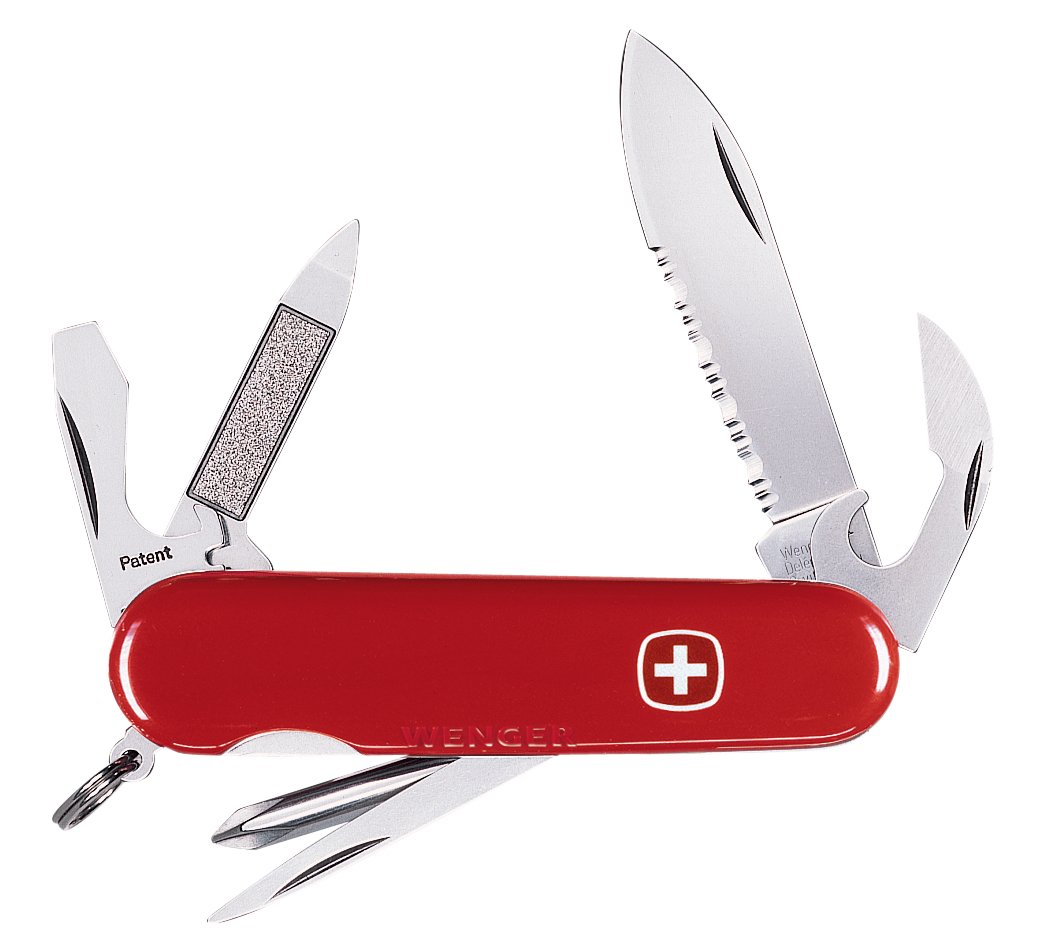
For now, I plan to test with a 111mm Soldier(which has serration towards the front of blade) vs 111mm OHO plain edge trekker. Would you or anyone suggest other kinds of blade that has both plain edge and serrated version, but same steel and identical in construction/handle?

 )


Hello! It looks like you're interested in this conversation, but you don't have an account yet.
Getting fed up of having to scroll through the same posts each visit? When you register for an account, you'll always come back to exactly where you were before, and choose to be notified of new replies (either via email, or push notification). You'll also be able to save bookmarks and upvote posts to show your appreciation to other community members.
With your input, this post could be even better 💗
Register Login


