
Folding Knives for EDC
-
Yes, but these aren't "penny" knives, intended for shepherds, peasants, fishermen or hunters. They are fighting knives that have less everyday utility (most are long and thin, oriented more at piercing than cutting). Undoubtably beautiful, they belong to collections and traditional folklore festivities, rather than urban EDC.
Anyway, I told you that we are not world famous for our steel. So Cretans do the same thing Ghourgas do. They use old files and suspension metal from old German and Swedish trucks. The finest steel recycled.
-
You lack an Austrian Trattenbacher Feitel: https://de.m.wikipedia.org/wiki/Trattenbacher_Zauckerl
That should cover all the bases of being truly different, cheap/for ordinary people, and intended for EDC type of use. Not my cup of tea, but since this thread seems to be about covering ground in traditionals...
-
Great collection!
You might consider one of the most traditional of the traditional slip-joints - the Stockman. I carried assorted Stockmen for years, before discovering SAKs. More compact than my Scout knives, and with a lot of utility. The long pointed clip blade can also work as an awl; the sheepsfoot was designed for leatherwork but also works great as a box cutter. They also feel good in the hand, and have a wide selection of sizes and handle materials. I like the looks of the square-end Stockmen, but the round-end ones are easier on the pocket.


-
@kkokkolis said:
Yes, but these aren't "penny" knives, intended for shepherds, peasants, fishermen or hunters. They are fighting knives that have less everyday utility (most are long and thin, oriented more at piercing than cutting). Undoubtably beautiful, they belong to collections and traditional folklore festivities, rather than urban EDC.Anyway, I told you that we are not world famous for our steel. So Cretans do the same thing Ghourgas do. They use old files and suspension metal from old German and Swedish trucks. The finest steel recycled.
You should get a portuguese "corta-e-pica" from Palaçoulo. Cost less than €5 and is a multitool: knife, fork, bottle opener.

-
Yes, many knives fit the description
http://www.knifeplanet.net/iconic-knives-in-europe/
I like that Austrian one, it is as simple as it gets with that cylindrical handle.
-


This one is the knife I bought.
Knives here follow the general concept of Opinel, sans Vibrolock. This one has a liner lock, most are friction folders.
I've seen Opinel blades and even a Scandi blade, but this is the most original shape. All are hand made, so you have to find one with nice fit and finish. There are several sizes. Handle is from Olive tree for the cheap ones. This goes up to other woods, bones and horns, most from local flora and fauna. The handle has a distinct V tail, but there are two other shapes, one for the abundant serrated sickle (Tsaprazi, or Svarnadaki) and one for clipped blades. It doesn't have a nail nick but it is opened easily one handed.
Tourist kitch requires the blade and handle to bear certain ornaments. Two dolfins, a Kri-Kri goat, the Crete map shape (they love it here as Cypriots do), a Cretan outdoorsman, the Phestos disk and a Mantinada, traditional verse as a local Hai Ku.
There are astonishing Damascus and file forged blades, with white bone handles. This one is inox but it cuts great out of the box. Finish is a bit crude, testifying a handmade mass production procedure.
Generally, it is as good as any Opinel. It costs here 20€ for tourists at this #9 size, which is close. -
@kkokkolis said:
Yes, but these aren't "penny" knives, intended for shepherds, peasants, fishermen or hunters. They are fighting knives that have less everyday utility (most are long and thin, oriented more at piercing than cutting). Undoubtably beautiful, they belong to collections and traditional folklore festivities, rather than urban EDC.Anyway, I told you that we are not world famous for our steel. So Cretans do the same thing Ghourgas do. They use old files and suspension metal from old German and Swedish trucks. The finest steel recycled.
much like the old Spanish navajas, or Sardinian Resolza


-
This one is the knife I bought.
Knives here follow the general concept of Opinel, sans Vibrolock. This one has a liner lock, most are friction folders.
I've seen Opinel blades and even a Scandi blade, but this is the most original shape. All are hand made, so you have to find one with nice fit and finish. There are several sizes. Handle is from Olive tree for the cheap ones. This goes up to other woods, bones and horns, most from local flora and fauna. The handle has a distinct V tail, but there are two other shapes, one for the abundant serrated sickle (Tsaprazi, or Svarnadaki) and one for clipped blades. It doesn't have a nail nick but it is opened easily one handed.
Tourist kitch requires the blade and handle to bear certain ornaments. Two dolfins, a Kri-Kri goat, the Crete map shape (they love it here as Cypriots do), a Cretan outdoorsman, the Phestos disk and a Mantinada, traditional verse as a local Hai Ku.
There are astonishing Damascus and file forged blades, with white bone handles. This one is inox but it cuts great out of the box. Finish is a bit crude, testifying a handmade mass production procedure.
Generally, it is as good as any Opinel. It costs here 20€ for tourists at this #9 size, which is close.General Concept!
At least one portuguese brand, Cutelaria Martins, is making a similar model with a similar lock.
the most famous Portuguese knives are the MAM without a doubt, like Opinel is to France or Mora to Sweden, I'd say your collection is missing one!
-
There are a couple more here: http://morethanjustsurviving.com/historical-knives/
- HIGONOKAMI6. NONTRON11. BARLOW PATTERN (?)14. MIKOV FISH KNIFE
-
Combining various sources, I made a basic list.

- Bursa Arnavut Çakısı (Turkey- Albania)

- Lierenaar Farmers Knife (Belgium)

- Manly Knife (Bulgaria)

- Mikov Fish Knive (Czechia)

- Opinel Yatagan (France)

- Forge de Laguioe (France)

- Douk-Douk (France)

- Merkator K55K (Germany)

- Szankovits (Hungary)

- Maskara (Hungary)

- Stilleto (Italy)

- Resolza Pattada (Sardinia)
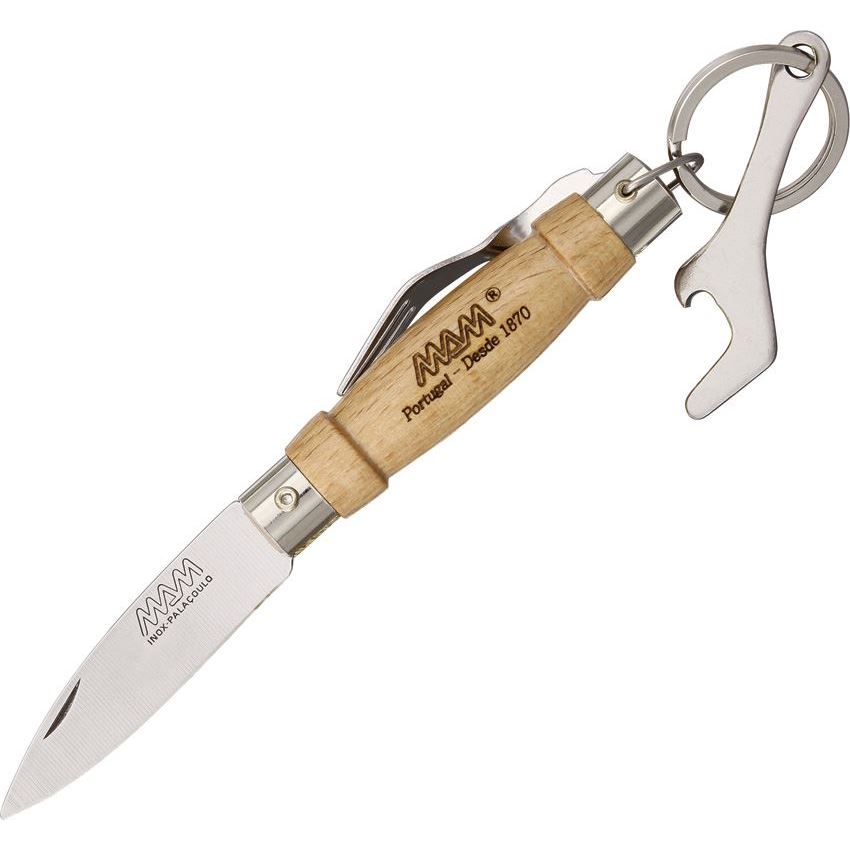
- MAM Corta e Pica (Portugal)

- Caneças

- (Joker) Navaja (Spain)

- Swiss Army Knives family (Switzerland)

- Sheffield knife (England)

- Higonogami (Japan)

- Nontron knife (France)

- Scarperia knife (Italy)

- Vendetta Corsa (France)

- Sodbuster (US)
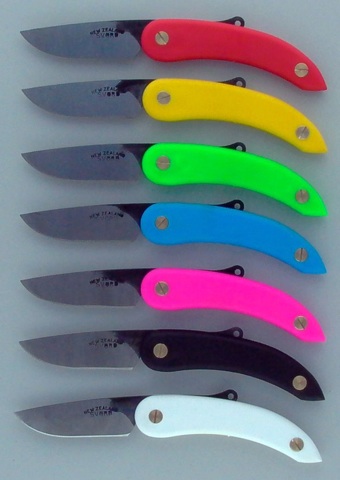
- SVORD Peasant (NZ)

- Okapi (Germany, South Africa)

- Trattenbacher Zauckerl (Austria)

26. Traditional Slipjoints (US) - Bursa Arnavut Çakısı (Turkey- Albania)
-
Of these, I consider 15 as penny/primitive/farmer-shepherd/historical knives, the ones with the cross
The rest are gentlemens' and/or fighting knives (the clasp knives especially)-
Bursa Arnavut Çakısı (Turkey- Albania) +
-
Lierenaar Farmers Knife (Belgium) +
-
Manly Knife (Bulgaria) +
-
Mikov Fish Knive (Czechia) +
-
Opinel Yatagan (France) + !
-
Forge de Laguiole (France)
-
Douk-Douk (France) + !
-
Merkator K55K (Germany) + !
-
Szankovits (Hungary)
-
Maskara (Hungary)
-
Stilleto (Italy)
-
Resolza Pattada (Sardinia)
-
MAM Corta e Pica (Portugal) +
-
Caneças (Portugal)
-
(Joker) Navaja (Spain)
-
Swiss Army Knives family (Switzerland) + !
-
Sheffield knife (England)
-
Higonogami (Japan) +
-
Nontron knife (France) +
-
Scarperia knife (Italy)
-
Vendetta Corsa (France)
-
Sodbuster (US) +
-
SVORD Peasant (NZ) +
-
Okapi (Germany, South Africa) + !
-
Trattenbacher Zauckerl (Austria) +
-
Traditional Slipjoints (US)
-
-
@pomsbz said:
I believe that the Sodbuster is originally a German design. I also have a feeling that the majority of US traditional knives were originally British patterns?I don't know if the American companies copied the designs that we were already selling them, or if our patterns were influenced by the fact that we were selling heavily into the American market .... or a mixture of both.
 There doesn't seem to be a complete mirroring either. Lambsfoot blades and Wharncliffe's seem to be less popular in the States, and such as the Congress seems less popular over here. There seems to be less traditional double-ended penknives (aka sleeveboard) about these days too. My grandfather always carried penknives rather than the larger "farmers knives" that he would consider many traditional slippies to be.
-
@50ft-trad said:
I believe that the Sodbuster is originally a German design. I also have a feeling that the majority of US traditional knives were originally British patterns?
I don't know if the American companies copied the designs that we were already selling them, or if our patterns were influenced by the fact that we were selling heavily into the American market .... or a mixture of both.
There doesn't seem to be a complete mirroring either. Lambsfoot blades and Wharncliffe's seem to be less popular in the States, and such as the Congress seems less popular over here. There seems to be less traditional double-ended penknives (aka sleeveboard) about these days too. My grandfather always carried penknives rather than the larger "farmers knives" that he would consider many traditional slippies to be.Do you mean your grandfather carried something like these Hartkopf knives?

-
@Ronald Schröder said:
@50ft-trad said:
I believe that the Sodbuster is originally a German design. I also have a feeling that the majority of US traditional knives were originally British patterns?
I don't know if the American companies copied the designs that we were already selling them, or if our patterns were influenced by the fact that we were selling heavily into the American market .... or a mixture of both.
There doesn't seem to be a complete mirroring either. Lambsfoot blades and Wharncliffe's seem to be less popular in the States, and such as the Congress seems less popular over here. There seems to be less traditional double-ended penknives (aka sleeveboard) about these days too. My grandfather always carried penknives rather than the larger "farmers knives" that he would consider many traditional slippies to be.Do you mean your grandfather carried something like these Hartkopf knives?
Like the top one, yes
-
The Sodbuster, or something I can't discern from a Sodbuster is often called Hippekniep in German and Mineur in French. I think such a basic pattern could easily flow very quickly between Sheffield-Solingen-Thiers making tracking the history somewhat challenging. I've seen it presented as a traditional American pattern on US sites, a traditional French pattern in French stores, and the Germans lay claim to it as well. I suspect they are all correct.






Hello! It looks like you're interested in this conversation, but you don't have an account yet.
Getting fed up of having to scroll through the same posts each visit? When you register for an account, you'll always come back to exactly where you were before, and choose to be notified of new replies (either via email, or push notification). You'll also be able to save bookmarks and upvote posts to show your appreciation to other community members.
With your input, this post could be even better 💗
Register Login


