The Humble Utility Knife.
-
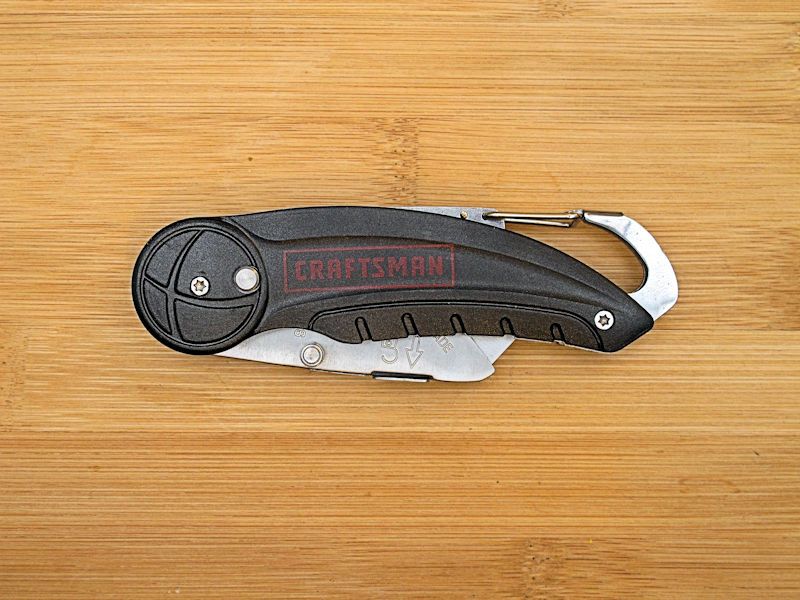
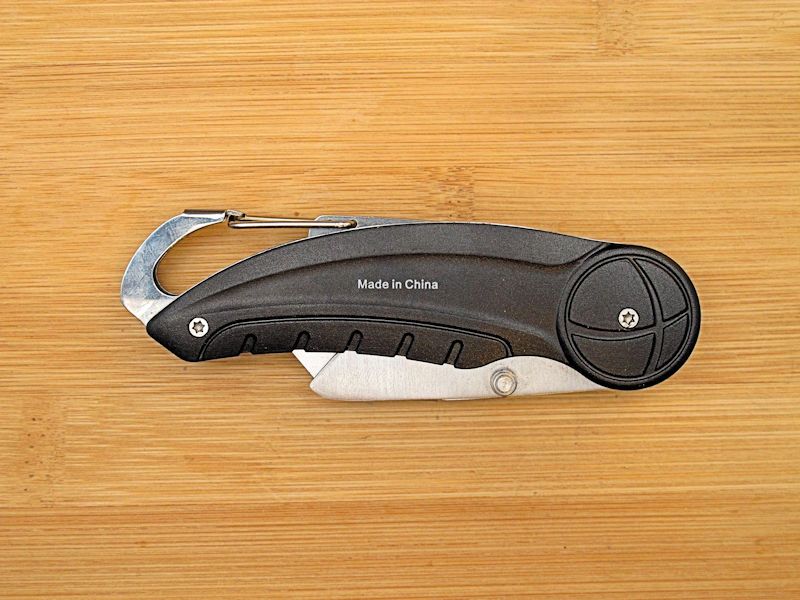
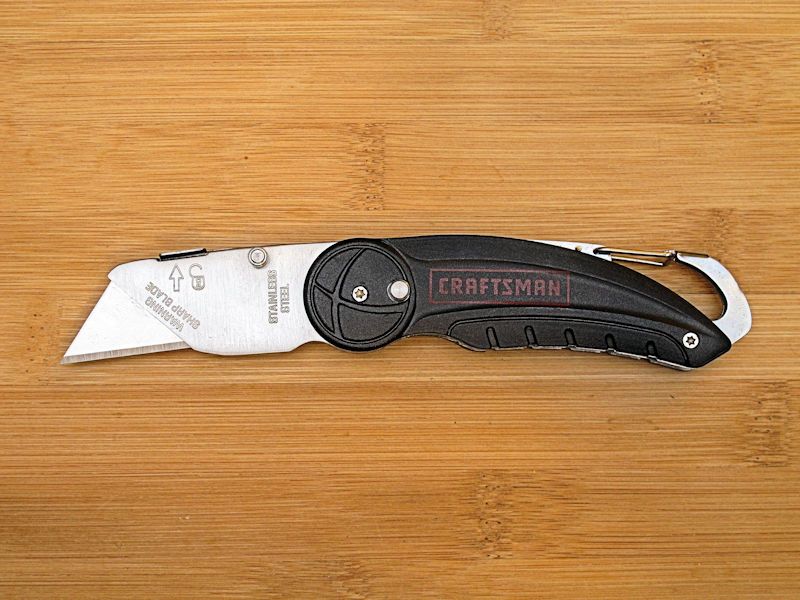
Craftsman Utility Knife.
The local Sears is closing down. Right now, the whole store is in a 20 to 50% non-refund sale. I spied this model and got 20% off the asking price. Funny how I have visited Sears many times recently, and have never seen this knife before. They must have found a box stashed somewhere in storage. The knife is of the button press style locking mechanism for the blade carrier. I much prefer a lock-back, or even a liner lock over this type of mechanism. With that said, the utility knife does feature a carabiner that is built in. A necessity considering this knife does not have a pocket clip.
Pros:
- carabiner
- blade swapping mechanism is easy to use
Cons:
- button style locking mechanism. not a big fan...but this is a personal preference
- no pocket clip
Overall, this is probably the last Sears branded utility knife I will ever buy at the local Sears. That kinda makes me sad. Not a bad little knife. The pivot action is slick, and the included carabiner is needed due to the lack of a pocket clip.
-
Unknown Safety Utility Knife.
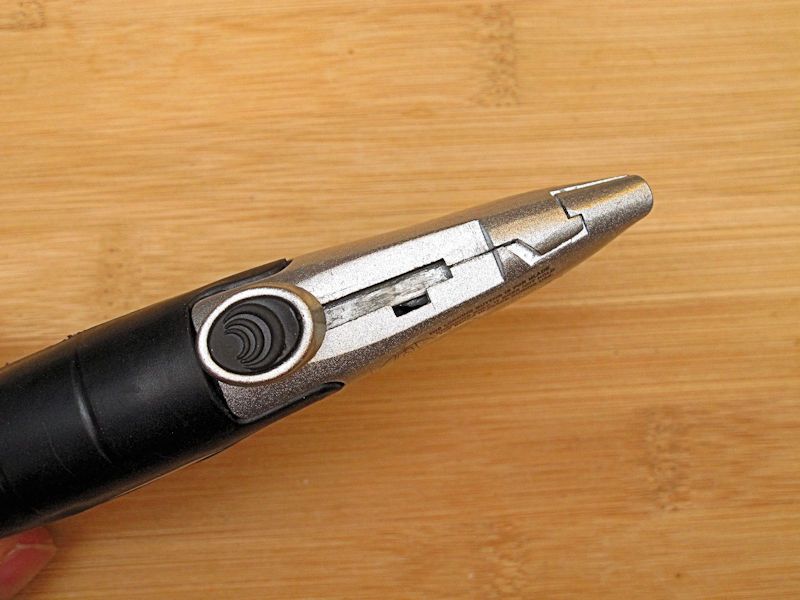
I have a love hate relationship with safety utility knives. Folks keep trying to make the utility knife as safe as possible for the end user, but quite often, the safety features get in the way of using the knife. This one is no exception. First off, this is one of those auto retract blades, meaning you have to apply constant pressure to the thumb button to expose the blade. Not only that, but you get an honest to goodness hand-guard. There is a rear button that unlocks the hand-guard. I figured this was where the extra blades might be found. To my disappointment, I found out that there are no hidden extra blades. That rear button simply unlocks the hand-guard to make the whole knife easier to hang on a peg. Yeah, I wish I was kidding about that um...er...feature.
Pros:
- ergonomics are good
Cons:
- useless hand-guard unlocking feature
- constant pressure to use the knife
- no blade storage compartment
- blade swapping a chore
Overall, another safety knife that tries to protect the user from itself.
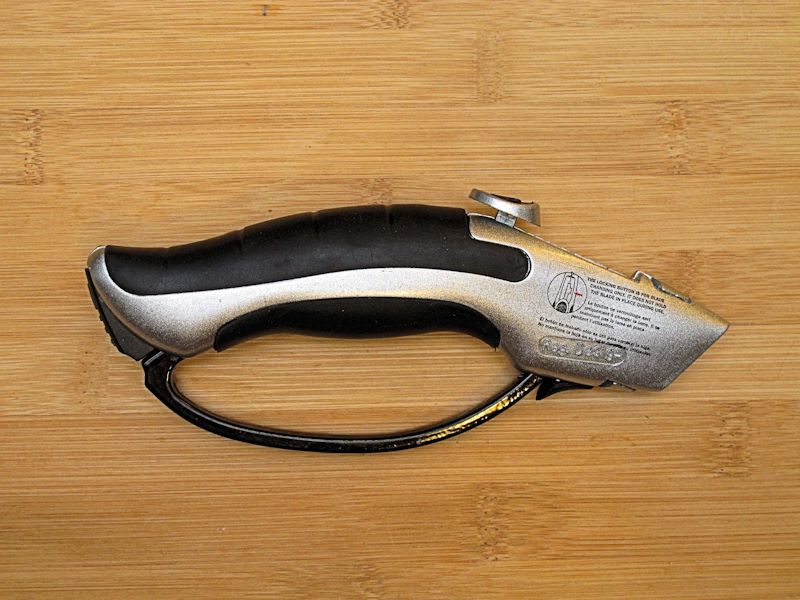
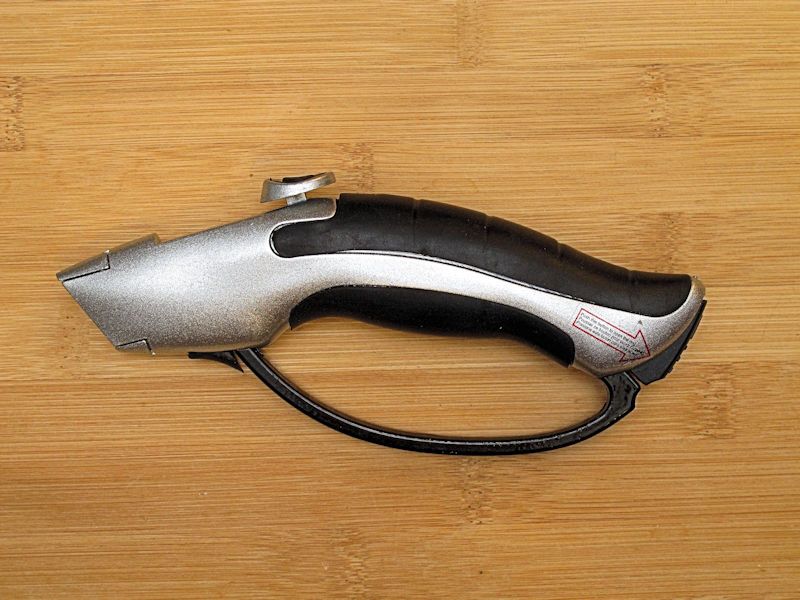
See that notch? You need to push the slider button to that location, which will allow you to swap the blade.
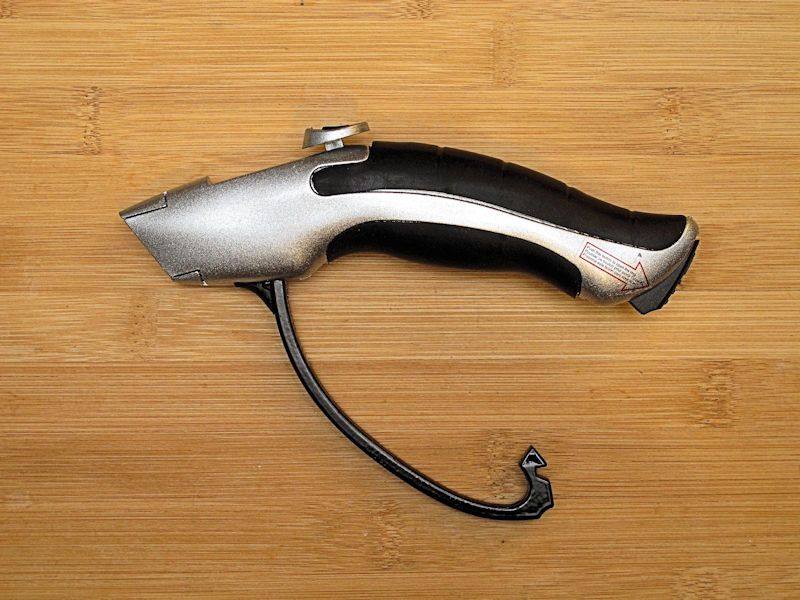
-
I like that black Craftsman one. :D
-
@Chako said:
Stanley 99E Sliding Utility Knife.Here is something for the more traditional user. The Stanley 99E has been around for ages, and is the type of knife many people think of when they think of a utility knife. Made from all metal construction with room to store extra blades in the handle, this knife is heavy duty. The sliding mechanism is smooth and the thumb button won't snag because it doesn't stick out from the body much. The biggest issue with this knife, is you will need a screw driver to do blade exchanges as the body is held together by a single screw.
Pros:
- all metal construction
- heavy duty
Cons:
- need a screw driver to open the knife up
Overall, it is knives like the Stanley 99E that has been around forever that are the foundations for many people calling a utility knife, a "Stanley". You can't go wrong with this knife. It doesn't offer many fancy features, but what it does offer is rock solid.


I grew up with this one. The reason I still refer to these kinds of knives as 'Stanley knives'. Whenever my dad would be doing DIY or working in the basement on his projects, this would be in the breast pocket of his overalls.
Interestingly out here they refer to utility knives as 'Japanese knives'. Not sure why. Any ideas where it might have come from?
-
I have never heard of a utility knife being called that here. :think:
Take a look at this wiki page on the utility knife. I wish it did give an explanation for the naming.
Names[edit]
In British, Australian and New Zealand English, along with Dutch and Austrian German, a utility knife frequently used in the construction industry is known as a Stanley knife.[2] This name is a genericised trademark named after Stanley Works, a manufacturer of such knives. In Israel and Switzerland, these knives are known as Japanese knives. In Brazil they are known as estiletes or cortadores Olfa (the latter, being another genericised trademark).[citation needed] In Portugal and Canada they are also known as X-Acto (yet another genericised trademark). In India, the Philippines, France, Italy, Egypt, and Germany, they are simply called cutter.[citation needed] In the Flemish region of Belgium it is called cuttermes(je) (cutter knife).[citation needed] In general Spanish, they are known as cortaplumas (penknife, when it comes to folding blades);[citation needed] in Spain, Mexico, and Costa Rica, they are colloquially known as cutters; in Argentina and Uruguay the segmented fixed-blade knives are known as "Trinchetas".[citation needed] In Turkey, they are known as maket bıçağı (which literally translates as model knife).[3]Other names for the tool are box cutter or boxcutter, razor blade knife, razor knife, carpet knife, pen knife, stationery knife, sheetrock knife, or drywall knife.
-
@Chako said:
I have never heard of a utility knife being called that here. :think:Take a look at this wiki page on the utility knife. I wish it did give an explanation for the naming.
Names[edit]
In British, Australian and New Zealand English, along with Dutch and Austrian German, a utility knife frequently used in the construction industry is known as a Stanley knife.[2] This name is a genericised trademark named after Stanley Works, a manufacturer of such knives. In Israel and Switzerland, these knives are known as Japanese knives. In Brazil they are known as estiletes or cortadores Olfa (the latter, being another genericised trademark).[citation needed] In Portugal and Canada they are also known as X-Acto (yet another genericised trademark). In India, the Philippines, France, Italy, Egypt, and Germany, they are simply called cutter.[citation needed] In the Flemish region of Belgium it is called cuttermes(je) (cutter knife).[citation needed] In general Spanish, they are known as cortaplumas (penknife, when it comes to folding blades);[citation needed] in Spain, Mexico, and Costa Rica, they are colloquially known as cutters; in Argentina and Uruguay the segmented fixed-blade knives are known as "Trinchetas".[citation needed] In Turkey, they are known as maket bıçağı (which literally translates as model knife).[3]
Other names for the tool are box cutter or boxcutter, razor blade knife, razor knife, carpet knife, pen knife, stationery knife, sheetrock knife, or drywall knife.
Switzerland
Japanmesser (Japanese knife): is only the ones with the break-off blades. Probably because the early models were all imported from Japan as they were invented independently by OLFA and NT (both Japanese companies). I think the earlier version were more for paper-cutting and the heavy duty came later.
Teppichmesser (carpet knife): Is what we common call the utility knives with the trapeze style blade -
I prefer metal construction for the non-clippable ones.
Sure, the sturdy feel and strong confidence-inspiring all metal handles are nice, but the weight penalty is often excessive
-
I have never heard of a utility knife being called that here. :think:
Take a look at this wiki page on the utility knife. I wish it did give an explanation for the naming.
Names[edit]
In British, Australian and New Zealand English, along with Dutch and Austrian German, a utility knife frequently used in the construction industry is known as a Stanley knife.[2] This name is a genericised trademark named after Stanley Works, a manufacturer of such knives. In Israel and Switzerland, these knives are known as Japanese knives. In Brazil they are known as estiletes or cortadores Olfa (the latter, being another genericised trademark).[citation needed] In Portugal and Canada they are also known as X-Acto (yet another genericised trademark). In India, the Philippines, France, Italy, Egypt, and Germany, they are simply called cutter.[citation needed] In the Flemish region of Belgium it is called cuttermes(je) (cutter knife).[citation needed] In general Spanish, they are known as cortaplumas (penknife, when it comes to folding blades);[citation needed] in Spain, Mexico, and Costa Rica, they are colloquially known as cutters; in Argentina and Uruguay the segmented fixed-blade knives are known as "Trinchetas".[citation needed] In Turkey, they are known as maket bıçağı (which literally translates as model knife).[3]
Other names for the tool are box cutter or boxcutter, razor blade knife, razor knife, carpet knife, pen knife, stationery knife, sheetrock knife, or drywall knife.
Switzerland
Japanmesser (Japanese knife): is only the ones with the break-off blades. Probably because the early models were all imported from Japan as they were invented independently by OLFA and NT (both Japanese companies). I think the earlier version were more for paper-cutting and the heavy duty came later.
Teppichmesser (carpet knife): Is what we common call the utility knives with the trapeze style bladeI'd assumed that it was due to the origin, didn't know it was in reference to the break off blade concept though. I assume the general nickname grew to cover all the styles here.


Hello! It looks like you're interested in this conversation, but you don't have an account yet.
Getting fed up of having to scroll through the same posts each visit? When you register for an account, you'll always come back to exactly where you were before, and choose to be notified of new replies (either via email, or push notification). You'll also be able to save bookmarks and upvote posts to show your appreciation to other community members.
With your input, this post could be even better 💗
Register Login


