
Wool as an outer layer
-
Wool is getting more and more popular here, partly on cause of the increasing awareness of problems with release of microplastics from washing clothes like synthetic fleece.
Wasn't even aware that microplastics are being released by washing synthetics
Ditto.
If there is, wouldn't you just need a filter? -
It's next to impossible to find any wool clothing in North America now, short of some boutique/outdoor brand (i.e. super expensive). I've tried some wool mid layer for winter sports but gravitated towards primaloft type, wool doesn't have good warmth/weight ratio in comparison. I'm sure it's much more durable though if you crawl in and out of trees all winter long.
LL Bean still sells wool sweaters. Though the cheaper option is to just buy an oversized wool sweater from a thrift store if you need a cheap midlayer. But you're right, synthetics have sadly taken over much of textiles. Natural fibers will soon be luxury details in a decade or so.
REI is a good source of wool products but their stuff isn't cheap.
You could also check out the tractor supply type stores, surplus stores and similar. About 15 years ago I got a sweater similar to the one in the picture for under $10 in an agricultural supply store and it lasted for about 12 years. It was warm and it survived the manual labor jobs
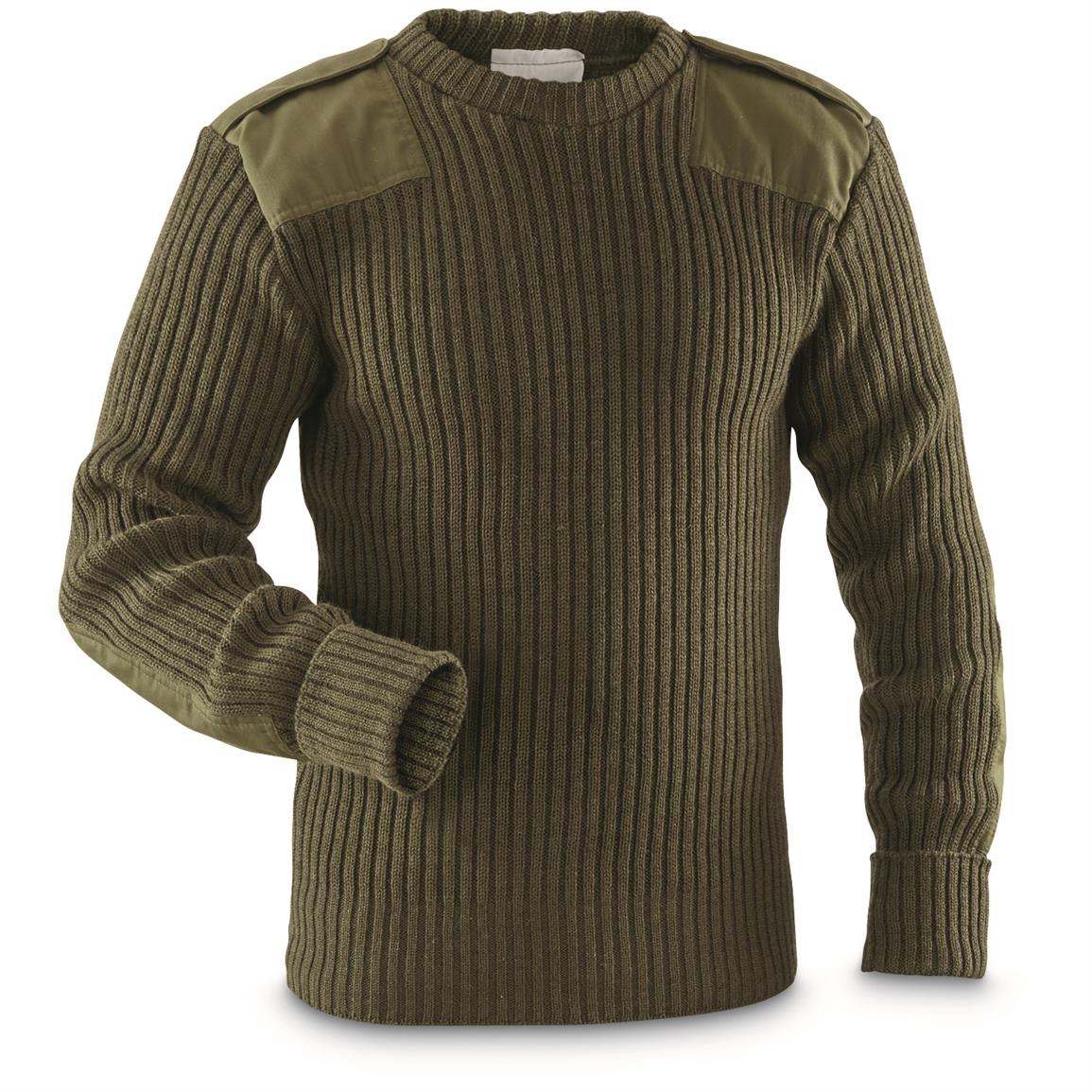
I picked up a genuine British Army surplus "Woolly Pully" and it's the warmest jumper I own by a long way. Made to be squaddie-proof, if not quite bulletproof. ;)
-
Wool is getting more and more popular here, partly on cause of the increasing awareness of problems with release of microplastics from washing clothes like synthetic fleece.
Wasn't even aware that microplastics are being released by washing synthetics
Just google "fleece microplastics" and you get a ton of hits like e.g. https://www.canadiangeographic.ca/article/fleece-clothing-major-contributor-microplastics-water
-
@Pablo O'Brien said:
Wool is getting more and more popular here, partly on cause of the increasing awareness of problems with release of microplastics from washing clothes like synthetic fleece.
Wasn't even aware that microplastics are being released by washing synthetics
Ditto.
If there is, wouldn't you just need a filter?The economics and engineering problems of waste water management I leave to someone else to analyze. But, at the time of writing, fibers from synthetic fleece is released in nature when washing the garments, just as cotton and wool fibers, and pieces of dirt, are. :)
-
So we've discussed the pros and cons of the wool as an outer layer. But I'm curious what we all actually choose to wear when it comes down to it.
Do you reach for wool, synthetic or cotton everyday? Just as important in relationship to your outer wear is what's under it and against your skin.
So what's your choice?For me I typically pick a performance fleece or hoodie over my synthetic underwear. If it's raining I cover it with a Northface rain jacket. My wool is relegated to socks, hats, and my merino wool Buff(which I edc). I had a few wool sweaters but they no longer fit and are more expensive to replace. My experience is that the wool stretches and shrinks when washed. My midlayers tend to get dirty quickly due to being around locomotives. So a fay or two and they need to be washed. So wool dies faster than my synthetic stuff. All in all my favorite is either an Under armour storm hoodie or a light weight synthetic puffy. They hold up better to my uses.
-
@4everYoung said:
So we've discussed the pros and cons of the wool as an outer layer. But I'm curious what we all actually choose to wear when it comes down to it.
Do you reach for wool, synthetic or cotton everyday? Just as important in relationship to your outer wear is what's under it and against your skin.
So what's your choice?For me I typically pick a performance fleece or hoodie over my synthetic underwear. If it's raining I cover it with a Northface rain jacket. My wool is relegated to socks, hats, and my merino wool Buff(which I edc). I had a few wool sweaters but they no longer fit and are more expensive to replace. My experience is that the wool stretches and shrinks when washed. My midlayers tend to get dirty quickly due to being around locomotives. So a fay or two and they need to be washed. So wool dies faster than my synthetic stuff. All in all my favorite is either an Under armour storm hoodie or a light weight synthetic puffy. They hold up better to my uses.
Regular daily wear - cotton, wool and synthetics
Out walking - Synthetics
Sat round a fire - wool
-
As an outer layer I mostly wear:
- a jacket that is 43% wool (has zip pockets, good for wallet keys phone)
- a woollen hoody (very warm but pockets aren't very secure) - only if cold and it's too heavy for hiking.
- a 2.5 layer Goretex jacket, either over the woollen jacket or preferably over my (merino) mid layer if it's raining or in windchill situations.
If we're talking hiking etc then I will have either a polyester/nylon or merino shirt depending on the temperature next to the skin.
-
Everyday work clothing, cotton and leather. Some wool when cold.
When it is cold and working outside, pretty much same as above.
Hiking, camping, hunting, same as above. Never was a fan of synthetic, especially when it is warm. It wicks great but does not allow any air through the cool you off. Also, it does not hold up to heat, sparks, work and I had one instance where diesel fuel ruined it.
My vest/waistcoat is my usual outside layer and is made cotton canvas with a wool blanket lining. It has to get really cold before I get my coat. It is made the same way, but thicker and has sleeves. People keep telling me that cotton kills and never should wear it, but I have done fine so far. That is from temperatures of -48F to 116F. Cotton is my primary layer. Shirt, socks etc. So far so good. -
https://www.gizmodo.com.au/2015/02/why-cotton-kills-a-technical-explanation/

(I haven't read it myself yet) -
During most of the year the clothes I wear are cotton or cotton & polyester mix.
During the "Winter" I've gone over to synthetic fleeces, my wool jerseys are old and worn and only good for around the house.
Wool hiking socks, and the rest of my hiking clothes are synthetic, which I found to be a winner.
-
@Syncop8r said:
https://www.gizmodo.com.au/2015/02/why-cotton-kills-a-technical-explanation/
(I haven't read it myself yet)OK, I have read it now, and it was very informative.

And to answer the original question more simply, yes I wear wool as an outer layer if I'm not going to get wet (in which case I wear a rainjacket).
-
If we're talking hiking then the base layer is usually cotton (quality synthetics and merino are expensive as hell here), mid layer depends on the time of the year but warmer months either nothing or a long sleeve button up shirt, colder months fleece, wool or some sort of a thicker flannel shirt (no idea if it is but it is damn warm) and a rain jacket/ wind breaker.
Around town and for work this doesn't really apply as I'm mostly in jeans and a leather jacket or have to dress it up
-
Even more reason to use natural fibers, be it wool, silk, or cotton: http://www.dw.com/en/plastic-fibers-pervasive-in-tap-water-worldwide-new-study-shows/a-40370206
tl;dr: most drinking water worldwide contains plastic fibers
edit: and the irony of my posting this while wearing a synthetic fleece jacket is not lost on this poster
-
For every day, where do I start? Cotton or linen shirt, cotton t-shirts etc. wool jumper or wool waistcoat if it's chilly. Jackets and coats can be Goretex, cotton, linen, waxed cotton, wool, tweed or leather. Basically, other than the occasional waterproof, all my day to day stuff is made from natural fibres.
When it comes to hiking and camping things do change up a lot and a lot more synthetics appear, quick dry trousers and shirts etc. fleece mid layers and waterproof jackets and over trousers for when it's nasty. I've discussed this in other threads before, but the one thing I really can't stand is a synthetic "wicking" base layer. I've tried a lot and spent some money, but they ALL make me sweat, far more than cotton does and that just isn't a good idea as far as I'm concerned. Lets put it this way; if I'm given the choice of a garment that is* absolutely* going to bring water into my clothing, beneath my mid layer and my waterproofs, I'd be nuts to wear it. Not everyone seems to have this problem, but I certainly do.
If a cotton base layer does get wet and the cold is becoming an issue, make sure you have a spare and change into it.






Hello! It looks like you're interested in this conversation, but you don't have an account yet.
Getting fed up of having to scroll through the same posts each visit? When you register for an account, you'll always come back to exactly where you were before, and choose to be notified of new replies (either via email, or push notification). You'll also be able to save bookmarks and upvote posts to show your appreciation to other community members.
With your input, this post could be even better 💗
Register Login


