How the smurf do you tie an alpine butterfly? (Awlso, general knot thread)
-
I've been working on relearning all my old Boy Scout knots this month. Got most of them down, and I'm expanding into trying to learn some new ones. The Alpine Butterfly came up a lot, but I spent a full hour today and can't get it to come out right. Anybody got a good guide (preferably with pictures)? And, whatever, what knots do you all like? I think my favorite is the taut-line.
-
Search for Google Drive "The Complete Guide to Knots and Knot Tying." It shows the Alpine Butterfly knot with very clear step by step photos. I thought about posting the page, but Google gets particular about that sort of thing. You can download the PDF. Best wishes. Gary
-
There are a number of good and free phone apps available to assist with knot tying.
There are only a couple of knots that I actually use and can tie from memory:
Overhand/Fisherman’s/Double Fisherman’s Knot - It’s a stopper, it’s a joiner, it can form either a collapsing (self-tightening) loop or a fixed loop (depending on how it’s used). Probably my favorite knot for it’s versatility.
Taut-line Hitch - For keeping and adjusting tension on a line, of course. My most common uses are rigging tents and tarps, stringing clothes lines, etc.
-
https://www.animatedknots.com/complete-knot-list
Although I'm sceptical about anything claiming to be complete it does have quite a few knots along with instructions.
Back in the day I used to work with equipment at sea and in that setting knots were critical. (Be it whether to make sure the knots could not loosen by themselves or that they could be loosened on purpose when required). The most common knots were bowline, clove hitch (with safety knot) and sheet bend (often double for easier loosening later). Together with various splicing, and some 4-6 other knots you could solve most tasks. (The complete site linked above doesn't seem to have those, so I don't know their English names...)
-
@IMR4198 said:
Search for Google Drive "The Complete Guide to Knots and Knot Tying." It shows the Alpine Butterfly knot with very clear step by step photos. I thought about posting the page, but Google gets particular about that sort of thing. You can download the PDF. Best wishes. GaryThat one is interesting, since it's obviously missing an entire step at #4, where the end of the rope somehow teleports.
-
I see where there should be another step or two after photo 4. I couldn't tie the knot from the destructions, but then I always made the kids on the playground tie my shoes for me.
You asked about what knots we use. I can tie a bowline, a sheet bend, and some form of a taut line hitch (adjustable hitch with a roller). For ordinary use I use the old formula of "A round turn and two half hitches won't let you down when you need it." I used to be able to tie a Palomar for fishing, but I probably have forgotten how. Clinch knot. I tie my shoes and boots one time with a conventional shoelace knot and then tie the two loops in an overhand knot and never unlace them. Just slip them on and off. Stays that way until I wear the shoes out or break a lace. Best wishes. G

-
Alright, I figured out at least part of the issue. Most knots are either symetrical, or have a defined "front" and "back."
But, if you look online, you see version of the APB both ways. I'll call these "outtie" and "innie" for the position of the vertical "wing" loops.[attach id=0 msg=2522456]
OUTTIE (animated knots)[attach id=1 msg=2522456]
INNIE (net knots)And several oopsies (rope lab):
[attach id=2 msg=2522456]I think I've got it mostly down now, but still need some practice.


-
-
-
That book actually seems complete.
And while searching for it I also came across the "International Guild of Knot Tyers". I also stumbled across mathematical knots which seems to be a rather intricate field - tying knots can be bad enough, but trying to definitively describe all possible knots with use of formulas seems way worse! Not to mention understanding what some given formula means in practical ropework... (I need my visuals!)
-
@Farmer X said:
Though it can be difficult to find, I'd recommend The Ashley Book of Knots.I have an Ashley's, but I find it's a difficult book to actually learn to tie knots from. It's great if I want to check "did I tie a real X or a Y that's similar", and the historical info is cool, but I don't find it useful for teaching.
Like I said yesterday, I think I have it solved. The problems with the Butterfly are:
-
It's about as unsymetrical as a knot can get. Go left>right instead of right>left? Different knot. Front to back instead of back to front? Different knot It doesn't help that there doesn't seem to really be a consensus on which side of the final knot is the front and which is the back, and most sites don't give you pictures of both (or do things like give you right "front" and wrong "back".
 )
-
When you tie it wrong, it's looks and behaves very close to correct (until you put it under load, I guess.) Tie a bowline wrong? It'll slide, obviously not a bowline. Tie a square knot wrong? A granny looks fairly different.)
-
While many knots have multiple ways of being tied, there is usually one that's the "default" and the others are either used in weird edge cases or as curiosities. Both the "figure eight" and "hand wrap" method are about equally popular for the Butterfly, and there's also a (slightly less, but still fairly popular) twist/hybrid method. Even within the main methods, there's a lot of variations.
Long story short, when you start learning the butterfly, it feels like you're learning four or five different related knots (like learning a timber hitch, two half hitches, and a taut line or something), but no one actually tells you which one is which. They do tell you to make sure you don't accidentally tie the DEATH BUTTERFLY. But don't do a great job of explaining what it actually looks like, how it's different, etc.

-
-
-
-
This thread had one consequence. I saw how badly my knot tying skills had deteriorated. Now I am taking a piece of cord and re-learning how to tie some things. Also I learned the Simple Simon knots. Simple Simon Over. Simple Simon Under. And the Simple Simon Double. Good for tying two lines. Secure even for slippery synthetics. It was even fun. Thanks Bob. Best wishes. Gary

-
-
-
-
-
I too like rope work and pioneering. Yeah. :ahhh
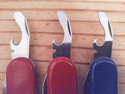
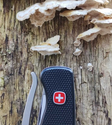
Here is a total poser shot from today. I didn't actually do any rope tying or knot practicing, but wanted to bring something to the thread out of sheer excitement. ::)
[attach id=0 msg=2524436]What’s the marlin spike there?
-





Hello! It looks like you're interested in this conversation, but you don't have an account yet.
Getting fed up of having to scroll through the same posts each visit? When you register for an account, you'll always come back to exactly where you were before, and choose to be notified of new replies (either via email, or push notification). You'll also be able to save bookmarks and upvote posts to show your appreciation to other community members.
With your input, this post could be even better 💗
Register Login