Hiking Carry
-
Curious to know if any hikers on here would talk about their carry. I carry quite a bit overall. I mostly use the items I’ve attached to my pack straps, which are a LM Signal, a Victorinox Hunter Pro, a Victorinox baseplate compass, a small Niteize flashlight, and a cheap pair of small binoculars (these last three are in an old Army combat bandage pouch), and a whistle on a lanyard.
There s a compartment on my pack that seems ostensibly to be a water bottle pouch that I have repurposed as a “tool kit”, in which I have a Buck Pursuit 656, a folding camp trowel, a cheap folding saw, a Coast flashlight, a pair of Hardy work gloves, and some paracord. I’ve used the saw some, but the rest is mostly “just in case.”
I also have a Maxpedition Mini in the main compartment with a sharpener, a small fire kit, a LM bit kit, and some other things. I also have a basic FAK and ACE bandage.
I always wear gloves and use a walking stick fashioned from a branch I took from a dead tree (which is most of them in this semi-arid region).
I suppose it’s too much, and I don’t really use most of it. But I think carrying it helps me stay in shape. Ten miles is a long hike for me, and usually I go six or so.
Any thoughts welcome.
-
I'm not much of a hiker (yet), but it is something I intend to take up. Earlier today I traipsed along the Detroit Riverwalk, covering maybe three miles, and my right knee felt like it might give out when I came up the stairs at the house. Obviously I need to get myself in better shape.
My hiking carry would consist of a survival kit and a first-aid kit. Of course, a fixed blade, multi, and folding saw would be included. Those are items I'll happily spend a little extra money on. One thing I've determined is that the 750 paracord that was in my survival kit was overkill; 550 would work just as well and doesn't have as much bulk. A water container, some beverage base, a few snack items, and a supply of nicotine pouches would also come along.
Hope I've been at least somewhat helpful.

-
For short trips I just a have a bum bag of about 5-6 liters - never really notice it is there. Typically not all that much in it - one or two drinking bottles, spare socks, spare t-shirt, a thin insulating jacket, a thin waterproof pant, a a Wenger SAK, sturdy gloves, a storm beanie, small bottle of sanitizer, band aid, paper towels, a bit of food or chocolate bar, matchsticks, and a sturdy bag or two just in case. With the exception of matchsticks they are all used fairly often.
Usually combined with a waterproof jacket with plenty of ventilation options.
-
Here’s what I normally have in/on my daypack and in my pockets:
Pockets:
Cell phone
Vic Rambler on keychain
Vic Alox Bantam in wallet
1-2 additional knives/SAKs
Tick key
Key chain flashlight (single AAA)
PWII in wallet
Primary flashlight, typically 1x21700 these days (currently Nitecore MH12 Pro)
Fisher Bullet
Whistle
Sliver grippers
Several Bic lighters
1-2 Bandannas
Couple of Wet Ones singles
Wallet/cash
Day Pack:
Two compasses
I like to have a paper map of area in a Ziploc bag, but this isn’t always possible/convenient to acquire
Small diamond rod
Sharpie
Headlamp
Extra batteries in Ziploc bag
Small Rite in the Rain notebook
Fire kit (more Bic lighters, firesteel, stormproof matches, newspaper, maybe some other tinder) in Ziploc bag
Sawyer mini kit
Sunglasses
Hat (either wide-brimmed sun hat or warm fleece hat, depending on season/weather)
Fleece jacket - depending on season/weather
Probably 100’ - 200’ of 550 cord; I like to pre-cut it into some 12’ and some 24’ lengths
Signal mirror
Extra bandanna
Extra whistle
More Wet Ones singles
Good quality poncho
At least 40 fl oz of water in uninsulated stainless steel canteen; maybe additional water in Nalgeen depending on length of hike, weather, and anticipated distance between water sources
1-2 empty heavy duty 55 gallon trash bags
1-2 empty two gallon Ziploc bags
Vic Farmer X
Small Ziploc bag of moleskin
Nisaku Yamagatana
Bug spray - 40% DEET
Maybe a fixed blade if I feel like it
Couple of Black Diamond Miniwire carabiners
Couple of emergency mylar blankets
Maybe lunch and or snacks depending on expected timing and duration of hike
Maybe backpacking stove with fuel, pot, & utensils if I anticipate using these things
-
-
Nate-I carry much of the same non-tool gear that you do in various parts of my pack. I carry two liters of water when it’s hot out, but usually one if it’s cool or cold. I should do a complete inventory.
-
I love hiking gear and ways to carry. Here is my kit. [attach id=0 msg=2485512]
Main clothes are wrangler atg, and a buttoned hooded sun shirt. In winter I have along the winter extras:neck gator, balaclava, wool gloves, leather gloves. I have 2 pairs of ankle/wrist gators if needed for extra warmth or super bug protection
[attach id=1 msg=2485512]
My minimal kit is a cup and bottle (lost my metal bottle will replace), and a collapsible bag. my more extensive kit adds a bush pot, bowl, skillet and “twig stove” all nested together.
[attach id=2 msg=2485512]
Cutting tool minimal kit is the farmer. Maximum kit adds a Mora, folding saw and small shovel.
[attach id=3 msg=2485512]
The rest of the kit is a groundsheet, tarp, wool blanket that can be snapped into a poncho, flashlight/headlamp/candle, lighters, matches, whistle, head bug net, inflatable pillow, sleeping mask space pen/notebook, bandana, fishing kit, fishing line/cordage, pepper spray, and a bubble envelope that is used as a seat/kneeling pad. I don’t always take everything depending on the season and hike. This setup is pretty light and if I am carrying hiking poles then making tarp shelters is very easy.


-
-
-
@Farmer X said:
Fiskars X-7! I need to give mine its litmus test (and earn the Axe User badge in the process).
The Fiskars has been amazing. When I first started I had this idea in my head that a wood handle was required and the composite would break down, but then the opposite ended up happening. My wood handled broke and the Fiskars remains 100%. It is a hard worker, one of my sons favorite tools to learn and practice using. One of these days I will redo the handle on my other as it is from my grandpas old tools. I should also grab the axe badge on of these days.
-
My hiking carry tend to vary by time of year, location (how remote) and length. Lately when I hike it usually isn’t very remote, so I tend to go pretty light. But I always have the basics then just expand on them depending on the situation.
The basic load out includes water bottle, SAK (usually Farmer X), headlamp, lighter, poncho, first aid kit, bandana and snacks. I also ensure I have phone, wallet, and small powerbank.
If it is more remote, I’ll add a way of purifying water, small alcohol stove and container, emergency tarp/bivy and rope, more extensive first aid kit, and fixed blade knife.
If there is potential for colder weather, I’ll carry a thermal poncho that converts to bivy and extra layer in addition to all other items.
-
@Sos24 said:
If there is potential for colder weather, I’ll carry a thermal poncho that converts to bivy and extra layer in addition to all other items.What type of thermal poncho/bivy? I have been interested in that concept, and do carry a poncho for rain. The wool blanket/poncho combo is not quite big enough to make a bivy though, so the tarp fills in.
-
I got it from 2GoSystems. It is made of a material similar to Tyveks and the inside is heat reflective. It isn’t as warm or comfortable as a wool blanket and probably isn’t going to replace your normal kit for multi-day hikes. It is more a versatile piece for “just in case”emergencies or a little extra warm for colder/wetter than expected.
Unfortunately they are sold out.
-
@Enginears said:
What type of thermal poncho/bivy? I have been interested in that concept, and do carry a poncho for rain. The wool blanket/poncho combo is not quite big enough to make a bivy though, so the tarp fills in.In Norway the "Jerven fjellduk" in its various versions (and decent copycats) is more or less the standard. They come in various sizes/ configurations, camoflage patterns and levels of insulation. They have many different uses - poncho, various shelter types, emergency bag, outer sleeping bag, sleeping bag (depending on insulation and temperature). There are several videos on various ways to use them on Youtube including some from the Norwegian military. They are expensive - the Helsport Fjellduk Pro is a similar concept that cost less. (Also used by the military).
Here is one enthusiast for example - https://www.youtube.com/watch?v=C4yhX_5jrvM&list=PLZcN8gHNMvNTIpALb_5lZitl10Sg0gc5E
-
-
Nice thread.
For day hiking, if it’s a warm or hot season and a well traveled area or reliable cell reception so that I can expect to ask for help if I blow an ankle or knee, then I use a waist pack for water, maybe a rain jacket as outer layer, cell phone, car key fob with Nitecore Tube light, a whistle, and a FAK consisting of a Byrd Finch knife, a couple of self adhesive bandages for blisters, a small roll of first aid tape and a cut up T shirt for anything else, a small amount of Benadryl and Ibupropen for strings or snake bites.
If it’s more remote, unknown cell reception, or generally any chance of spending some time waiting for help if I hurt a leg, then I switch to a Camelbak backpack to carry all of the above plus add a little more water, maybe insulation layer (s) depending on season and weather, and a 60 gallon blaze orange trash bag to use as a bivy as described on equipped.org. I also have a Adventure Medical Systems bivy made out of something like Tyvek that I will add if I’m unfamiliar with the area. A lighter is in that bag, but usually not an extra knife or cordage. I’ll have a dedicated camera most of the time. I haven’t taken the Inreach Mini on day hikes like this, but maybe I should?
If I plan to spend night, then I’ll call it backpacking, and that adds a lot of gear…
-
@mfturner said:
I haven’t taken the Inreach Mini on day hikes like this, but maybe I should?Interesting product. The world is progressing!
 I still think I'd go for a full satellite phone as that allows for more nuanced communication. For instance the other day I was hiking up to behind a mountain top. As I moved around to the back I lost cell reception. My first issue with that was that those I was hiking with, and who stayed at the lowland in the front, might get worried. Or if there were changes in plans there were no way of letting me know. Thus being able to communicate, even if not an emergency, would be useful. (Still, having a device to alarm about emergency would of course be reassuring in itself).
As a side note: On the way I added some considerable weight to my backpack, so going back down the same way I got up this fairly friendly mountain didn't seem realistic. The issue was seeing an alternative way all the way down - I basically had to commit to a route and hope it didn't leave me blocked at one of the many cliffs further down. (And thus having to go all the way up again for another try). Now wiser men than me would have brought a map, and wiser men still would know where they were on that map with confidence, but modern tools would have been even nicer at that point. If/ when I revisit I will be better prepared.
-
@mfturner said:
I haven’t taken the Inreach Mini on day hikes like this, but maybe I should?If I already had the device, and were already paying for a subscription for it, I would take it along. Seems like a good insurance policy, in exchange for carrying an item that is about the weight of a Vic Huntsman.
-
I have yet to be on a true overnight hike, have remote camped before but it was a hunting trip. However, I have been on a couple pretty gnarly day hikes. One that stands out is the Grinnell hike at Glacier National Park in Montana. It was years ago so I will try to remember what I carried, but will probably miss some stuff or get some stuff wrong. Since it was a day hike there wasn’t sleeping gear.
Hydration bladder
IFAK
Sawyer filter system
Extra snacks
Some sort of MT
Some sort of fixed blade
Either a firesteel or lighter
Sofirn SP36 flashlight
Spare socks/underwear? Maybe clothes?
Jacket likely stuffed in the bag, maybe not though.
Vortex binoculars
Bear spray
Radio
Poncho
A .44 mag


-

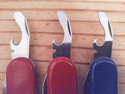


 Going up and down those will be a hike for sure!
Hello! It looks like you're interested in this conversation, but you don't have an account yet.
Getting fed up of having to scroll through the same posts each visit? When you register for an account, you'll always come back to exactly where you were before, and choose to be notified of new replies (either via email, or push notification). You'll also be able to save bookmarks and upvote posts to show your appreciation to other community members.
With your input, this post could be even better 💗
Register Login