
Let's see your monoculars
-
This Brunton has an apparent field of view of 25 degrees, real soda straw. Similar Zeiss and Nikon monoculars have 40 degrees, the Docter and Minox and Leica 50. 40 is not bad, precious orthoscopics have so and Plossls have 50. But when you are used to the realm of Ethos (100), Naglers (82) or Delos (72) all monoculars feel claustrophobic. Each of these eyepieces weights 6 or more times the weight of the Docter and their size dwarfs it. And no monocular worths against a similar binocular. Binoculars are more stable, give a stereoscopic view, brain picks up the best from each eye and superimposes images. They also have a far greater selection. And most are around 60 degrees that look as if they were more because of binocular vision.
The reasons to use a monocular are size, portability, zooming (nightmare in binoculars) and simplicity. People with just one worthy eye might prefer them also. -
Here's a couple crappy pics of the one I picked up for like $6, it ain't the best but it helps you see further away and clear, lol.
JR

"The-Mad-Plumbarian" The Punisher Of Pipes!!! JR
**As I sit on my Crapper Throne in the Reading Room and explode on the Commode, thinking, how my flush beat John’s and Jerry’s pair? Jack’s had to run for the Water Closet yet ended up tripping on a Can bowing and hitting his Head on the Porcelain God! **🚽

-
You won't accuse me for my natural envy of Tosh's panoramic optics picture, I'm a buff for such things and this is subconscious, I can't help it. So, after several attempts, I present here my (almost, I guess, at least I hope so) picture of my complete terrestrial/portable optics picture, excluding tripods, mounts, bigger telescopes, eyepieces and other accessories.
Front Row: My Fieldscope/Solar Scope/Rich Field Telescope: William Optics Zenithstar 66ED Petzval Refractor 66/400 f/6.1 with RDF and Baader Hyperion Zoom II 24-8mm (16.67x-50x)
Second Row, Center: My vintages: 1989 CCCP (KOM3) ΜΠ2 8x30 Porro Monocular, a classic Zeiss Soviet copy and my tourist monocular for decades, 1989 CCCP 3T Zenica 8-24x40 Telescopic Fieldscope, my pirate scope and Asahi Pentax Type 561 8x30, another classic Zeiss copy, this time from Japan.
Second Row, Flanks: My EDC binoculars: Nikon Monarch 7 ED 8x30 for a lightweight allaround capability on the left and Pentax Papilio 6,5x21, the close focus speSmurfpillst.
Third Row: The workhorses: Zeiss Conquest HD 8x42, my current workhorse and Zeiss Terra 8x42 ED, former workhorse and guest binocular
Fourth Row, Center: The EDC micros: The Analytik Jena Docter 8x21 C Folding Porro Monocular with +1, +2, +5 & +10 dioptres lenses (8x/100cm, 8x/50cm, 10x/20cm & 20x/10cm) and Belomo Triplet 10x21 loupe, MTO coin for reference
Fourth Row, Flanks: A borrowed Nikon Action CF 12x50 that is going to be replaced by some 10x (Canon IS 10x42 preferably) on the left and a beater Lidl Bresser 10x50
Fifth Row: The boulders: Canon 18x50 IS UD AW and Canon 12x36 II IS for astronomy and long range terrestrial use.
That's it. Enough with optics, I need some SAKs and Multitools healing experience now.

-
Wow!! Very nice

I hold you personally responsible for the 3 optics that have arrived over the past few weeks :D
Couldn't resist the GreenKat 10x50 monocular
But neither did the gorgeous GreenKat Mini Refractor escape my attention.
Then yesterday at work I spotted a complete 1200mm / 80mm f15 Topic Refractor (Towa 339) including original wooden case and complete with everything since the day it was sold over 40yrs ago.... Yep...couldn't resist. Did the 120 mile 3hr round trip to collect it last night - arrived home at 10pm. Up this morning at 5am to get into work early to give me time to start my latest project.......A mobile telescope pier that I hope will take both telescope and binoculars.
Got home from work earlier and began cutting all the Steel. I hope to begin welding tomorrow.Before you ask...No, I can't weld but I fully intend to have a good go!

Clear skies my friend


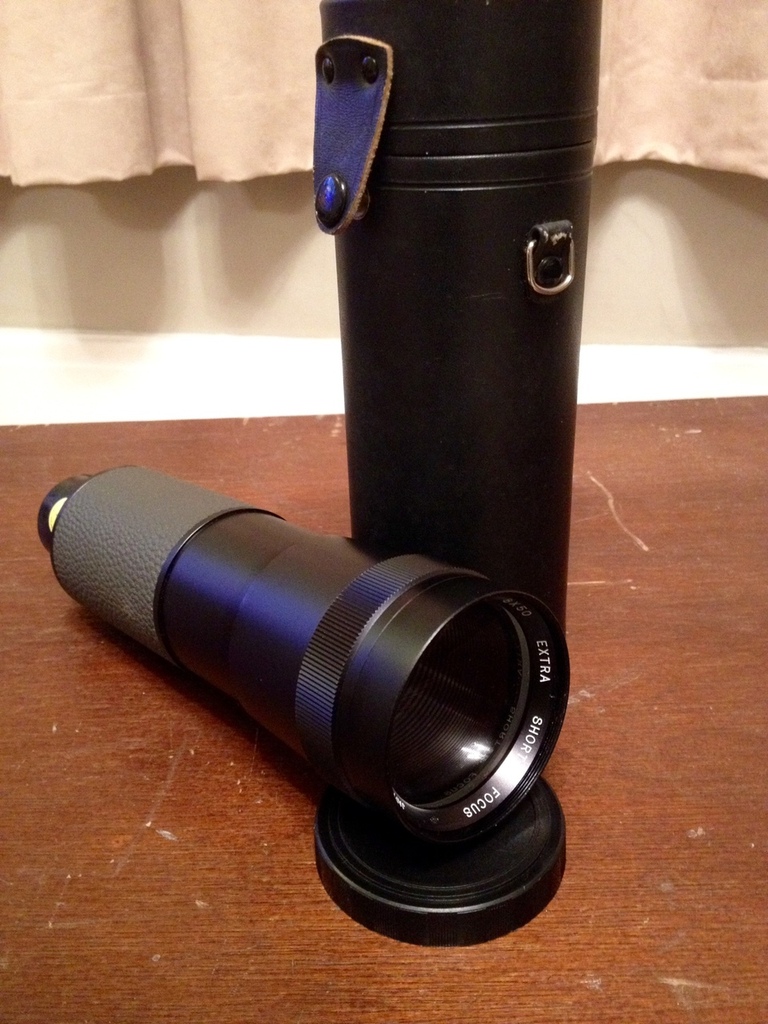

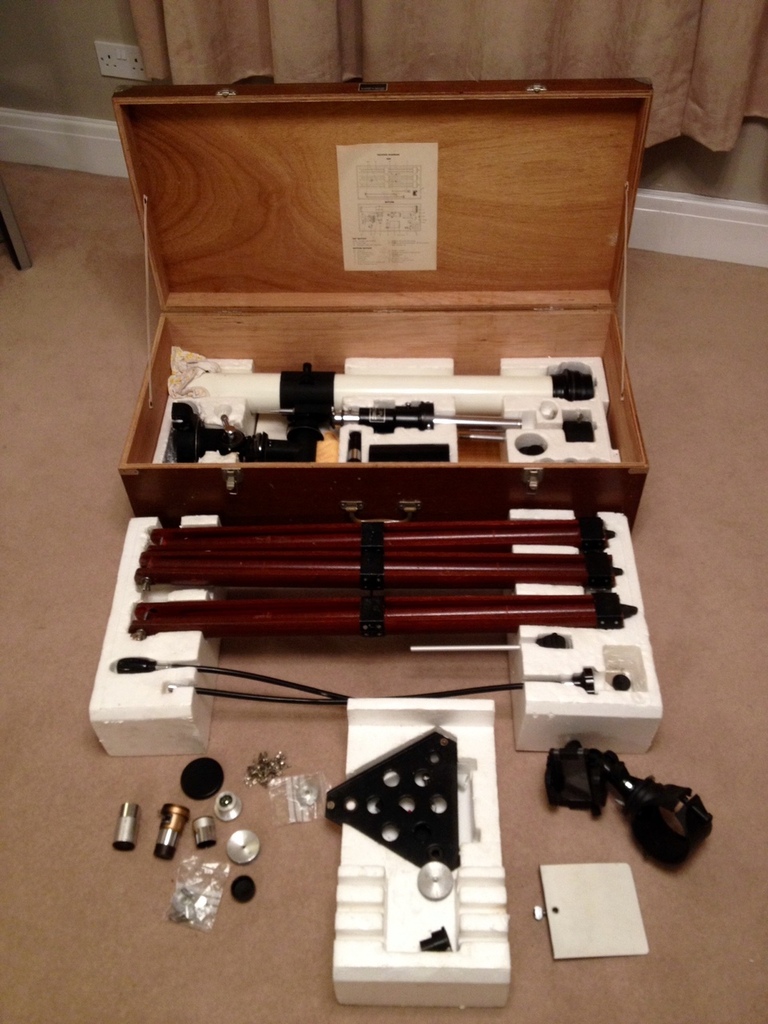
-
Here's my mobile pier in its first stages....
Braked swivel castors will go under the steel channel. Lugs will be welded onto the brace bars ready for screw jacks to be made and fitted.
Also the main pier will be braced off the base.I'm undecided on the Top section. Most simply use 2 steel plates seperated by 4 threaded bars to allow access to remove the scope mount. I've simply cut an additional piece the same width as the 120mm box section. I'm not convinced, so I'll weld up the base and work out the top when I get there.
Wish me luck!
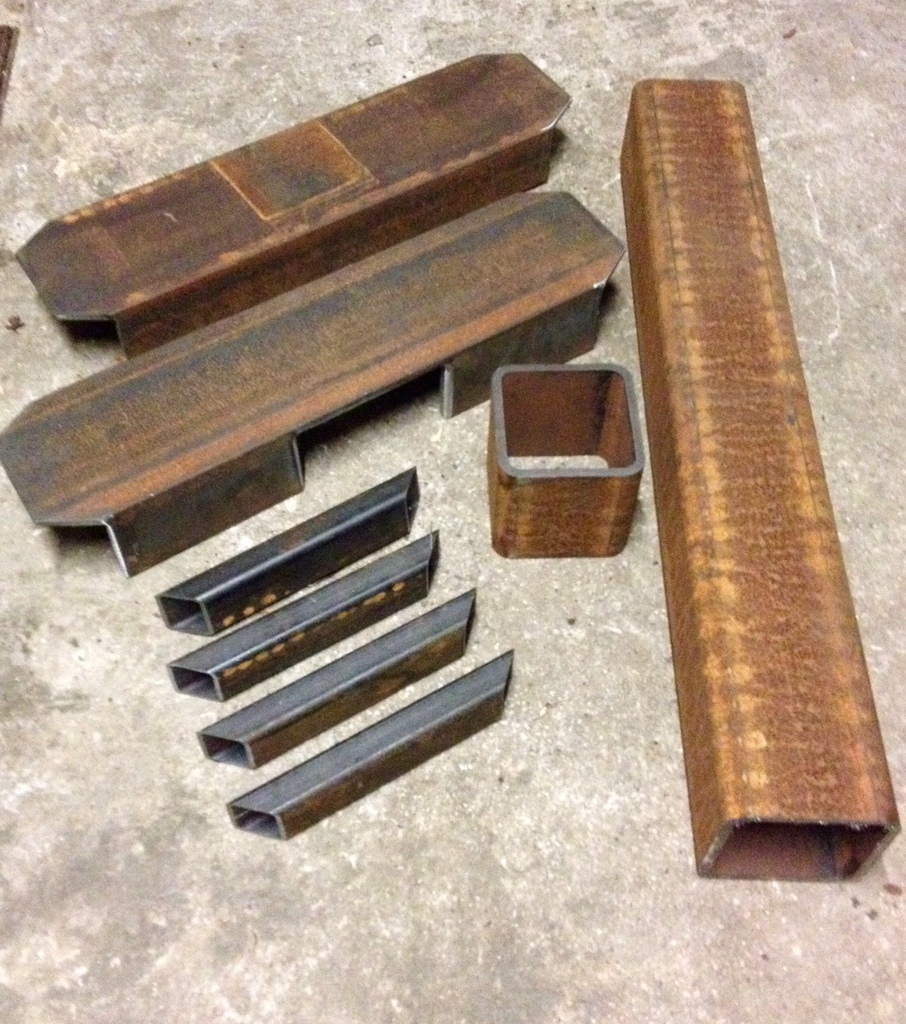
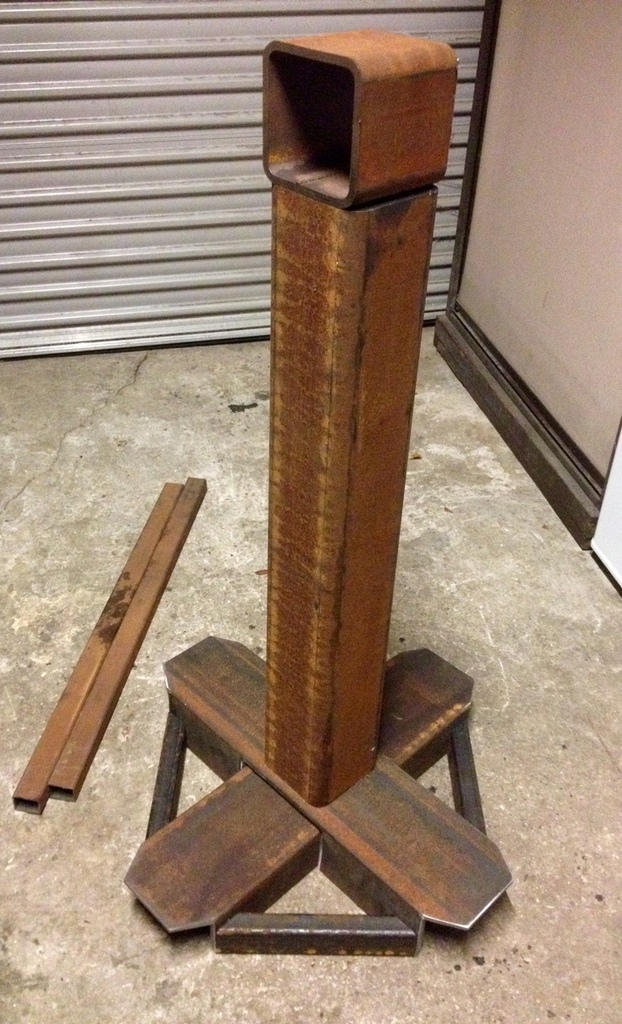
-
@kkokkolis said:
Good luck!
Wouldn't a tubular pier have less vibrations?
That Towa must be a planet killer.Why would that be?
I didn't have a choice - it was just scrap steel they were throwing at work - so I asked if I could have it.We do have some heavy steel tube, but there is little if any wastage. Like most companies today - stock is purchased with minimal wastage.I'm starting to wonder now if the square box section will work or not. I considered filling it with sand to dampen any vibrations.
-
@kkokkolis said:
You'll see two more incoming monoculars soon. Both are very interesting, the German is vintage and very flexible and the Japanese is promising.I don't remember the last time I bought a SAK.
Looking forward to seeing these when they arrive. I'm like you, I haven't bought hardly any MT's or SAKs for the past few months.
My mobile pier is coming on......slowly

After you mentioned the vibration issue I decided to brace the entire post. Plus add extra large screw jacks for stability as well as the castors when they arrive. The reason it's taking so long is partly due to my work place getting fed up with me constantly asking for more materials

Good new is I think I've now got all my steel bits. Just done a dry fit to check if there's anything glariously missing before I start welding it together.
I'm going to paint it Off White when it's finally completed.
-
I received today my tiny original Arthur Siebert EMOscop!
The attached pic is from eBay but that's the one I bought pictured there. I'm going to take new pics soon.
The two other pics are from submin.comFor your understanding, I quote http://www.submin.com. Both **Gerald **from submin.com and **Urlich **from http://www.monocular.info/ helped me with my purchase of this special vintage optic (now discontinued and alive as a Haverhills Chinese copy).

EMO-OPTIK Arthur Seibert Emoskop
The Emoskop is a combined telescope, magnifier and microscope only 42mm long in a close fitting cylindrical leather case (in brown or black).
Arthur Seibert ( 1906- 1980) was Ernst Leitz lens designer from 1920 to 1947. In 1948 Seibert left Leitz and undertook the task of designing a subminiature lens for the Minox camera. Arthur Seibert was a great optics designer, his most famous designs were the five element Pentar lens of Minox II and the COMPLAN lens for Minox III/IIIs/B, and early Minox C. The Pentar and COMPLAN are still two of the sharpest subminiature lens-- in fact the sharpest of any commercial photographic lens”.
In 1951, Arthur Seibert formed his own optics company, EMO-OPTIK in Wetzlar, West Germany. Many EMO's products are masterpieces of optical design, for example:
Highly corrected EMO Wetzlar 5x Macromax loupe
Emoskop : this marvel is a telescope, a microscope and three magnifier in a pocket package only 50mm long. It is the optical equivalent of a Swiss Army knife.
Octoskop : A combination loupe with eight magnifications: 2x 4x 6x 10 x 14x 18x 20x 28 x .
An Emoskop in an all plastic construction has been made in China. Some Emoskops came with an accessory stand for use as a microscope.The three parts are combined to give a telescope of 2.5x, magnifications of 5x, 10x,15x and a microscope of 25x and 30x.
The top and middle pieces (see photograph above) are combined to give an adjustable 2.5x telescope.
The middle piece is a 5x magnifier.
The bottom piece (far right) is a 10x magnifier.
Middle and bottom combine to give 15x magnification.
All three combine to give 25x microscope. By pulling the ocular out of the objective tube magnifications between 25x and 30x can be obtained. The ocular is itself a x5 magnifier when viewed through the tube.
When used as a microscope the working distance is 24mm from the object.
25x 42mm
30x 57mm
When used as a telescope 2.5x/teleloupe 3xInfinity 34mm
30cm 50mm
When used as a Loupe5x 25mm
10x 9mm
15x 32mm

-
Love the the leather case!
JR"The-Mad-Plumbarian" The Punisher Of Pipes!!! JR
**As I sit on my Crapper Throne in the Reading Room and explode on the Commode, thinking, how my flush beat John’s and Jerry’s pair? Jack’s had to run for the Water Closet yet ended up tripping on a Can bowing and hitting his Head on the Porcelain God! **🚽
-
This is my Emoscop, with similar optics and MTO coin for reference. See how small it is? It is very sharp and capable for its size though. 3x for a monocular seems little but it isn't, since I use it for things I can see but I can't focus on in order to read letters on them. As a microscope or loupe on the other hand it is unbeatable. Apparent field of view is restricted, about 30 degrees (it is Galillean after all) but true field of view is about 10 degrees, so you can see 10 degrees with your central vision (high resolution) and it cuts all peripheral vision, but you have the other eye for that, if you keep it open. And all that from an optic the size of a thimble, designed from an man who worked for Leitz (Leica) and Minox (the spy cameras of the vintage espionage films) and made in Wetzlar, Germany.
My case specimen is made from black leather, with the patina of time but still functional and adorable.Belomo triplet loupe and Docter monocular are designed by Zeiss, perhaps in the same city of optics, Wetzlar, but built in former Zeiss factories in Jena and Minsk. Belomo still makes lenses for Zeiss microscopes, if that says something. The best part is that these optics, because of their size, can be EDCed and cost much less than standard apperture optics from the same manufacturers. Emoscop has an aperture of 18mm as a monocular (standard sizes are 16-21mm) and 13mm as a microscop. Used with a gigher magnification loupe it provides more microscopic magnification. So a 20x loupe would give 50x-60x. But my experience says, 5x for nature, 10x for gems, 15-30x for artifacts (money, stamps etc). It covers them all!

-


This is the Opticron Gallery Scope 8x20.
It is bigger than the Docter and close to its optical quality, with just a little more field if view and eye relief. What's nice with that scope is its extreme close focus without the need for an additional lens. It goes down to 30cm. There is an additional 3x lens though, integrated to a transparent skirt that converts it to a 24x field microscope. Overall I find the Docter more charming but this could be a beater scope (not that it is a cheap one) that can be used faster (thus without a case, although it came with a case. Even myself I find EDCing 3 monoculars (and a binocular) a little over the top, so I have to choose which one would be more useful.
The fact is that none of these has the great eye relief and ease of use of the Zeiss 6x18 a friend has. All three together cost less than the Zeiss.





Hello! It looks like you're interested in this conversation, but you don't have an account yet.
Getting fed up of having to scroll through the same posts each visit? When you register for an account, you'll always come back to exactly where you were before, and choose to be notified of new replies (either via email, or push notification). You'll also be able to save bookmarks and upvote posts to show your appreciation to other community members.
With your input, this post could be even better 💗
Register Login


