
February Fixie Challenge
-
@Nix said:
Cool new knife, Sak60!
Can you tell us a bit more.....

Pal Blade Company purchased the cutlery division on January 17, 1941 from Remington-Dupont which had been located at Bridgeport, Connecticut. Remington sold the cutlery department in order to utilize the existing Bridgeport plant space for the production of munitions ( I believe for the production of the Model 1903 rifle for the British government - GMC).
Pal leased a 100,000 square foot facility in Holyoke, Mass. located on the west side of Bigelow Street between Appleton and Cabot Streets. This building had been the A building of the Farr Alpaca Company. Interestingly enough, part of this building in the 1800s had been the home of the Henry Seymor Cutlery Company, makers of shears and scissors.
Removal of the machinery to Holyoke began on February 4, 1941 with the move scheduled to be completed within 30 days. By March 1st they planned to be in operation with two shifts employing 300 workers, many of them women. Plans were to have 450 employees within 3 months, and they were advertising that the company would be the largest cutlery manufacturing company in the United States. Full production was to begin in June, 1941.
At the time, Pal Blade also had factories in Plattsburg, New York, Montreal, Canada, Newfoundland and South America. Owners were brothers Abraham Mallman of Montreal and Joseph Mallman of New York.
The above information was taken from the February 3, 1941 Holyoke Transcript-Telegram
During World War 2, the plant was converted to make bayonets, sheath knives, and pocket knives for US forces. Following the war, the name was changed to the Pal and Personna Blade Co., Inc. Other company plants were located in Montreal, Canada, Plattsburg, New York, Barranquilla, Columbia and Buenos Aires, Argentina.
By December, 1945 the plant had been converted to peace time products and expanded their product line to include many items which had been unavailable during the war and for which there was a large market. Under the Pal name they produced pocket knives, paring knives, slicing knives and kitchen utility items in the moderate price range. The Personna items included gift sets, carving sets, carving knives and kitchen knives in the higher price brackets.
Employment in 1946 reached 950 workers on two shifts. 7:00 AM to 4:45 PM (3:45 PM for the women workers) and another shift from 3:00 PM to 11:00 PM. The plant worked 5 ½ days a week, closing at noon on Saturdays. At the time the plant operated on two floors of 90,000 square feet each. The first floor contained most of the assembly lines and production tables, while the basement was occupied by store rooms, a maintenance shop and one work room where paring knives were made. (Note – the building no longer exists - GMC)
The above information was taken from the December 4, 1946 Holyoke Transcript-Telegram
-
I'm generally not a fan of batoning but I've heard quite a bit about Mora's and batoning wood. It did a great job on this log, which was just narrow enough to finish :D

-
Cool new knife, Sak60!
Can you tell us a bit more.....
Pal Blade Company purchased the cutlery division on January 17, 1941 from Remington-Dupont which had been located at Bridgeport, Connecticut. Remington sold the cutlery department in order to utilize the existing Bridgeport plant space for the production of munitions ( I believe for the production of the Model 1903 rifle for the British government - GMC).
Pal leased a 100,000 square foot facility in Holyoke, Mass. located on the west side of Bigelow Street between Appleton and Cabot Streets. This building had been the A building of the Farr Alpaca Company. Interestingly enough, part of this building in the 1800s had been the home of the Henry Seymor Cutlery Company, makers of shears and scissors.
Removal of the machinery to Holyoke began on February 4, 1941 with the move scheduled to be completed within 30 days. By March 1st they planned to be in operation with two shifts employing 300 workers, many of them women. Plans were to have 450 employees within 3 months, and they were advertising that the company would be the largest cutlery manufacturing company in the United States. Full production was to begin in June, 1941.
At the time, Pal Blade also had factories in Plattsburg, New York, Montreal, Canada, Newfoundland and South America. Owners were brothers Abraham Mallman of Montreal and Joseph Mallman of New York.
The above information was taken from the February 3, 1941 Holyoke Transcript-Telegram
During World War 2, the plant was converted to make bayonets, sheath knives, and pocket knives for US forces. Following the war, the name was changed to the Pal and Personna Blade Co., Inc. Other company plants were located in Montreal, Canada, Plattsburg, New York, Barranquilla, Columbia and Buenos Aires, Argentina.
By December, 1945 the plant had been converted to peace time products and expanded their product line to include many items which had been unavailable during the war and for which there was a large market. Under the Pal name they produced pocket knives, paring knives, slicing knives and kitchen utility items in the moderate price range. The Personna items included gift sets, carving sets, carving knives and kitchen knives in the higher price brackets.
Employment in 1946 reached 950 workers on two shifts. 7:00 AM to 4:45 PM (3:45 PM for the women workers) and another shift from 3:00 PM to 11:00 PM. The plant worked 5 ½ days a week, closing at noon on Saturdays. At the time the plant operated on two floors of 90,000 square feet each. The first floor contained most of the assembly lines and production tables, while the basement was occupied by store rooms, a maintenance shop and one work room where paring knives were made. (Note – the building no longer exists - GMC)
The above information was taken from the December 4, 1946 Holyoke Transcript-Telegram

Great information! That is interesting on the women getting off a hour earlier - no doubt to give them time to get home and ready the family meals and other chores. It’s a shame the building no longer exists. -
@Barry Rowland said:
I'm generally not a fan of batoning but I've heard quite a bit about Mora's and batoning wood. It did a great job on this log, which was just narrow enough to finish :DI’m not a fan of batoning myself...the right tool for the right job...and as often as I have been in the woods, I have always found enough kindling to start a fire without having to baton anything. It is nice to know it can do it and if I had to I would!
-
@Nix said:
Great stuff, Sak60!Nice testing, Barry! I think that Mora has a stick-tang. Battoning might be a bit of a trial for it. Good to see it did well. Needless to say, I won't be battening anything with my Ulu.

Actually I think you have the right one for chopping - you could get a nice piece of wood, split the end long and wide enough to slide the handle in the wood and secure the end pining the ulu in it and have a hatchet. Mind you, within reason on the wood.
-
Great stuff, Sak60!
Nice testing, Barry! I think that Mora has a stick-tang. Battoning might be a bit of a trial for it. Good to see it did well. Needless to say, I won't be battening anything with my Ulu.
Actually I think you have the right one for chopping - you could get a nice piece of wood, split the end long and wide enough to slide the handle in the wood and secure the end pining the ulu in it and have a hatchet. Mind you, within reason on the wood.
I was thinking about that, too. The ulu's blade is fairly thin, I'm not sure it would stand up to much real chopping.

Sometimes these knives are tougher than one might think. On the other hand, I've already seen a little chipping in the edge with the can opening task........
-
Great stuff, Sak60!
Nice testing, Barry! I think that Mora has a stick-tang. Battoning might be a bit of a trial for it. Good to see it did well. Needless to say, I won't be battening anything with my Ulu.
Actually I think you have the right one for chopping - you could get a nice piece of wood, split the end long and wide enough to slide the handle in the wood and secure the end pining the ulu in it and have a hatchet. Mind you, within reason on the wood.
I was thinking about that, too. The ulu's blade is fairly thin, I'm not sure it would stand up to much real chopping.
Sometimes these knives are tougher than one might think. On the other hand, I've already seen a little chipping in the edge with the can opening task........
If it is on the thin side then I wouldn’t.
On a different note, regarding batoning...I was thinking on just starting the split and then going to a wedge to finish the split. Want to try that out with a Ka-Bar military that I bought and rides in my bike pack as a backup. -
@Rapidray said:
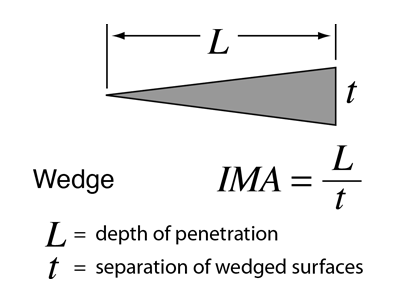
On a different note, regarding batoning...I was thinking on just starting the split and then going to a wedge to finish the split. Want to try that out with a Ka-Bar military that I bought and rides in my bike pack as a backup.I've seen entire trees split into planks with wooden wedges. Archimedes knew what he was doing with those.
-
On a different note, regarding batoning...I was thinking on just starting the split and then going to a wedge to finish the split. Want to try that out with a Ka-Bar military that I bought and rides in my bike pack as a backup.
I've seen entire trees split into planks with wooden wedges. Archimedes knew what he was doing with those.
So I don’t even need to start with a knife at all...I like that ideal way better. Thanks!
-
This challenge is continuing it's greatness!
Seems like your Mora held up better than my knife today Barry

Day 10:
Took the wife and dog out in the woods for a nice walk this evening.
All the wood is quite wet so I chopped and batoned some wood for my woodburning stowe to heat up water for a couple of teacups.
Noticed a big chip in the blade so it turns out it's not as good as I initially thought...On the other hand, I just need to order a blade from a bladesmith that makes knifeblades in laminated steel and make my own handle the way I want it
I might try and grind away the chip and use it for more delicate task from now on.


Sent fra min FRD-L09 via Tapatalk
-
@RF52 said:
This challenge is continuing it's greatness!Seems like your Mora held up better than my knife today Barry
Day 10:
Took the wife and dog out in the woods for a nice walk this evening.
All the wood is quite wet so I chopped and batoned some wood for my woodburning stowe to heat up water for a couple of teacups.
Noticed a big chip in the blade so it turns out it's not as good as I initially thought...On the other hand, I just need to order a blade from a bladesmith that makes knifeblades in laminated steel and make my own handle the way I want it
I might try and grind away the chip and use it for more delicate task from now on.
Sent fra min FRD-L09 via Tapatalk

Ouch! Not good. Hope it works out on the regrind for sure.
Oh - nice night photo’s by the way! -
This challenge is continuing it's greatness!
Seems like your Mora held up better than my knife today Barry
Day 10:
Took the wife and dog out in the woods for a nice walk this evening.
All the wood is quite wet so I chopped and batoned some wood for my woodburning stowe to heat up water for a couple of teacups.
Noticed a big chip in the blade so it turns out it's not as good as I initially thought...On the other hand, I just need to order a blade from a bladesmith that makes knifeblades in laminated steel and make my own handle the way I want it
I might try and grind away the chip and use it for more delicate task from now on.
Sent fra min FRD-L09 via Tapatalk
Ouch! Not good. Hope it works out on the regrind for sure.
Oh - nice night photo’s by the way! A bit surprised by the size of the chip, more like a chunk...
If anyone have any tips or tricks to get the edge back I'll appreciate it very much
Don't have access to any powertools/grinders so it must be done by hand.
Maybe sand it down with sandpaper and finish on a sharpening stone?I like a good fire pic in the dark
Sent fra min FRD-L09 via Tapatalk
-
@Nix said:
Wow. That's a big chip in the blade.It will take a lot of work to get that out, but might be a fun project. I might start with a file and file it to shape. Then finish up with stones. Regardless, it'll be a lot of work.
Thanks for the tip
I might try that and see if it feels like a lost cause, then it will be a decoration. If I can do it without loosing my mind I'll maybe use it again, but not for batoningSent fra min FRD-L09 via Tapatalk


Hello! It looks like you're interested in this conversation, but you don't have an account yet.
Getting fed up of having to scroll through the same posts each visit? When you register for an account, you'll always come back to exactly where you were before, and choose to be notified of new replies (either via email, or push notification). You'll also be able to save bookmarks and upvote posts to show your appreciation to other community members.
With your input, this post could be even better 💗
Register Login


